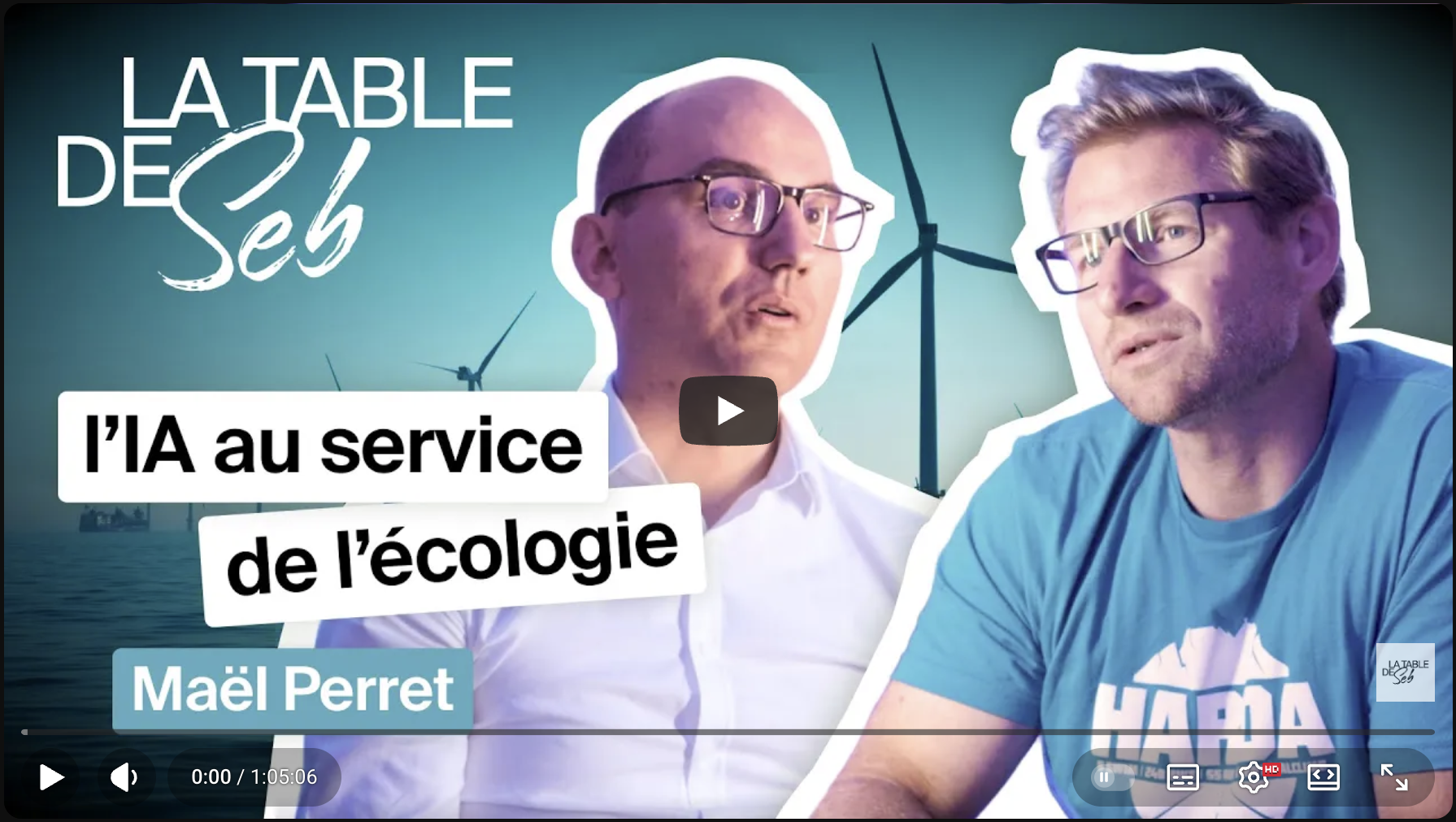
A look back at the episode of the podcast La Table de Seb with Maël Perret, CEO of Dyneo. The energy transition is often approached from the perspective of production: new renewable sources, electrification of uses, deployment of low-carbon infrastructure. However, an essential part of the equation remains underestimated: the actual performance of existing networks. In this episode, Maël revisits a central topic that still receives too little media coverage: the role of digital technology and data in optimizing thermal networks.
Producing renewable heat is essential. But producing it without controlling distribution, losses, and usage amounts to building systems that are inefficient from the moment they are commissioned.
Thermal networks are complex, extensive, heterogeneous infrastructures, often developed over several decades. Their performance depends as much on the quality of their initial design as on their ability to be finely controlled over time.
In the podcast, one observation stands out:
We can no longer manage 21st-century heating networks with 20th-century tools.
The digitization of thermal networks is not about "adding technology" for the sake of it. Above all, it aims to provide a better understanding of how infrastructure actually works:
Thanks to data (field measurements, operating history, continuous analysis), it is now possible to move from reactive management to proactive, data-driven management.
A key point addressed in the episode concerns the potential for optimization with virtually constant infrastructure.
Before talking about expansion, new sources, or massive investments, better utilization often allows for:
In other words, data becomes a lever for intelligent sobriety: doing better with what already exists.
For local authorities and operators, the complexity of heating networks makes decision-making difficult. Every technical choice has long-term impacts, both financially and in terms of energy.
Digitization allows decisions to be made objectively by:
In the podcast, this approach is not presented as an abstract promise, but as a tool already deployed on operational networks, with measurable results.
A strong message emerges from the discussion:
Digital technology does not replace physics, engineering, or field operations. On the contrary, it reinforces them.
Without a detailed understanding of thermal phenomena, the data is meaningless.
But without data, the complexity of modern networks far exceeds what human intuition alone can handle.
It is at the intersection of these two worlds—energy engineering and digital tools—that a decisive part of the energy transition is taking place.
This episode of La Table de Seb explores these issues in depth, taking a technical, strategic, and pragmatic approach.
🎧 Episode available here:
This exchange reminds us of an obvious fact that is too often forgotten:
the energy transition is as much about management as it is about production.


